Promoting Community-First Carbon Markets in the Philippines

By Yogi Bratajaya, Legal Fellow, Sustainable Finance and Mary Ongore, Senior Legal Manager, Sustainable Finance

Photo credit: Bantay Kita
Background
Carbon market mechanisms enable the sale of carbon credits, which represent quantified emission reduction or removals in a form that can be bought and sold. These credits are purchased by governments, companies and individuals to offset their own emissions. In the Philippines, such nature-based projects are often located within, or overlap with, territories traditionally owned by Indigenous peoples. Notwithstanding this, Indigenous peoples frequently face a range of legal, social and environmental challenges in relation to carbon markets and the protection of their rights, including the weak implementation of Free, Prior and Informed Consent (FPIC), inequitable benefit-sharing arrangements, and restrictions on land use, among others.
In late 2025, the Philippines accelerated its carbon market legal infrastructure when the Department of Energy established the first comprehensive framework for the generation and management of carbon credits in the energy sector. Furthermore, the Carbon Rights Act (HB 1817) is currently being drafted to define "carbon rights" as distinct from natural resource rights.
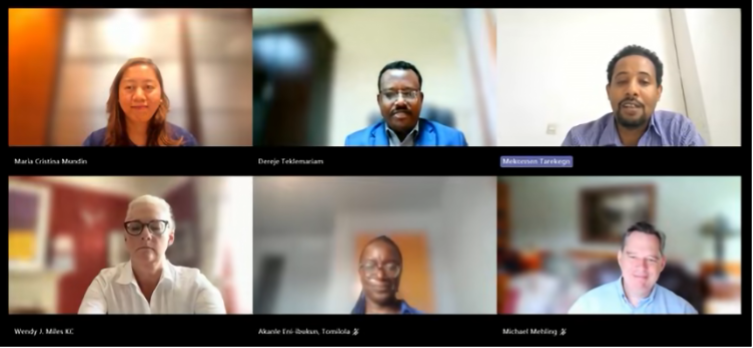
While these legal developments have the opportunity to mobilise climate finance and accelerate the transition to a green economy, it is imperative to ensure that Indigenous communities are empowered to act as informed decision-makers with the tools to protect and manage their ancestral domains. In response to the need to build the capacity of Indigenous peoples, International Lawyers Project (ILP) partnered with Bantay Kita (the Philippines chapter of Publish What You Pay), the Philippines National Commission on Indigenous Peoples (NCIP) and pro bono lawyers to hold a virtual training session on carbon markets and Indigenous peoples’ rights.
Emerging Themes in Carbon Markets and Indigenous Peoples’ Rights
The training on carbon markets sought to demystify complex concepts around carbon markets, explain how carbon projects intersect with the right to FPIC, and provide practical recommendations for Indigenous communities on negotiating carbon contracts.
The first part of the training gave an overview of core concepts in carbon markets and carbon projects. This involved unpacking the definition of key terms such as “carbon abatement” and “carbon credits”, describing the life cycle of a carbon project and explaining how carbon abatements are calculated. It also emphasised the obligation of proponents to ensure additionality, which requires carbon emissions reductions and removals to be additional to what would have occurred if the project had not been carried out, and permanence, which means that captured carbon must be maintained by the project and not be re-released into the atmosphere.
The session then addressed integrity issues related to carbon projects and how these projects impact Indigenous peoples’ right to FPIC. The lawyers running the session emphasised how permanence obligations and the need for proponents to issue “buffer credits” may cause the project proponent to unjustifiably restrict Indigenous peoples’ from accessing and using their lands. In light of these concerns, as well as other integrity issues of overclaiming and inappropriate benefit sharing, the pro bono lawyers highlighted emerging standards aiming to improve integrity and establish safeguards for Indigenous Peoples’ rights. For example, the “Sustainable Development Tool” created under the Paris Agreement Article 6 mechanism requires that project proponents, among others, must not access or utilise cultural and spiritual property of Indigenous peoples without FPIC.
Lastly, the pro bono lawyers provided practical recommendations for members of Indigenous communities to better safeguard their rights. A crucial aspect of this was the recognition of local communities and Indigenous peoples as holders of “carbon rights,” which refer to the right to claim the emissions reductions or removals achieved on project land. Project proponents should obtain these carbon rights from the Indigenous community before implementing the project and generating credits. Moreover, contracts between project proponents and Indigenous communities should establish clear benefit-sharing mechanisms, including provisions on when benefits will be received, the type and amount of benefits, whether and how benefits can be renegotiated, and the consequences if benefits are not delivered as agreed.
Conclusion
Given that frameworks for carbon markets have already been developed, Indigenous peoples require a clear understanding of how these mechanisms affect their rights and interests. By equipping them with tools to critically evaluate carbon projects, this virtual training aimed to ensure that nature-based carbon initiatives respect community land rights and deliver long-term socio-economic benefits.
As those most affected must be adequately informed and empowered to assert and protect their rights, trainings of this nature are essential as they help foster meaningful participation and reduce the risk of exploitation by ensuring that stakeholders across the carbon value chain remain accountable.
International Lawyers Project (ILP) provides pro bono legal support to more than 100 civil society organisations, communities and individuals each year. Through our Sustainable Finance programme, ILP works with our partners to identify and promote fiscal tools that can accelerate the transition to greener economies, such as carbon market mechanisms and green bonds.
If you need assistance or advice in this area, please contact us at contact@internationallawyersproject.org to discuss how we can help.